
A simple three-email welcome sequence for your business
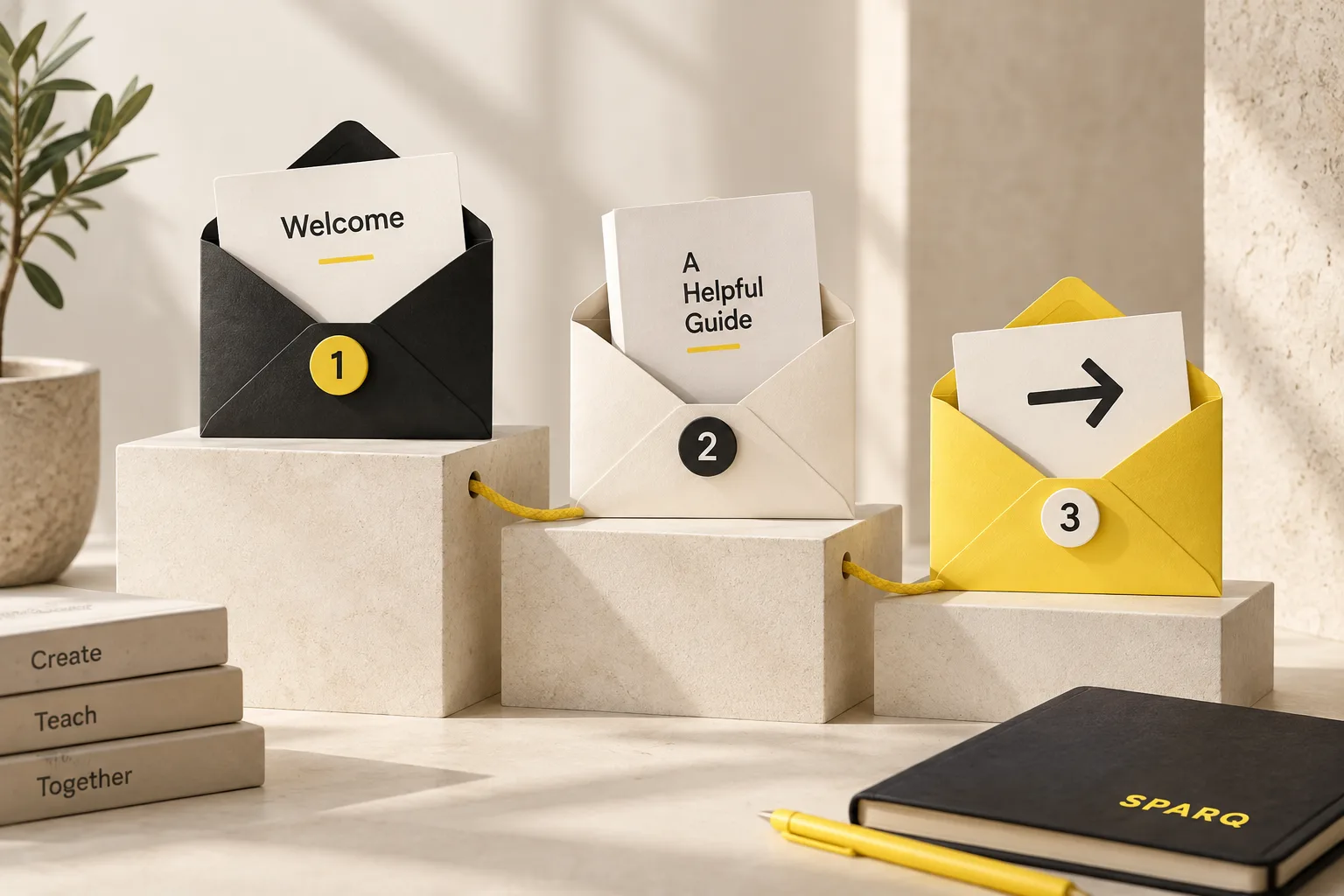
Someone downloads your checklist. You send it, then get stuck: should the next email introduce you, teach something, or mention your workshop? A short sequence can make the choice manageable.
Try three messages: deliver the promise, help with one related problem, and offer a relevant next step. Three is a starting structure, not a proven best length. Use this for people who signed up for those messages.
Email one: deliver the promise
Start with the reason someone signed up. If they asked for a checklist, give them an obvious link to it. If they joined for workshop updates, explain what kind of updates they can expect.
Imagine you teach managers how to run better team meetings. Your first email could introduce the meeting checklist they requested and suggest one small way to use it today.
A simple subject might be: “Your meeting checklist is here.” Make opening the checklist the main action. Keep your introduction brief.
Email two: make the resource useful
Choose one difficulty the reader might face when putting the advice into practice.
For the meeting checklist, you could explain how to choose a clear outcome before writing an agenda. Include an example: “By the end of this meeting, we will agree who owns each launch task.”
Then ask a question the reader can answer: “What usually makes your team meetings run over?”
Use a monitored reply address if you invite replies. A question creates an expectation that someone might read the answer. Decide how you will handle those conversations before the sequence starts.
Email three: offer a relevant next step
Connect the help you have already given to an appropriate offer. That might be a workshop, a consultation, or another useful article.
Explain who the next step is for and what happens when they click. “See the workshop outline” sets a clearer expectation than a vague button such as “Discover more.”
Avoid adding urgency unless there is a real deadline. The invitation should make sense because it follows the reader’s interest.
For a first test, send the resource immediately, a tip two days later, and an invitation a few days after that. Adjust for your audience and event timing. Review replies, resource use, relevant clicks, and unsubscribes. Opens alone do not show whether the sequence helped.
Before switching it on, run through the sequence yourself. Check links, names, mobile layout, reply handling, and the way someone can stop future messages. Also decide whether people who already take the next step should receive a different follow-up.
Turn the outline into a working sequence
If you have the resource but the writing and setup keep stalling, SPARQ can handle both within an agreed project. Nicky maps the audience and trigger, writes the agreed emails, connects forms and sequence rules, and checks test delivery. You receive a handover for managing it. Platform costs and ongoing management are agreed separately.
Frequently asked questions
What should I put in the first welcome email?
Give the reader what they requested, explain who the message is from, and set expectations for what follows. Keep the main link easy to find. If you promised a resource, delivering it should be the first priority.
How far apart should I send the emails?
Choose spacing that gives someone time to use the information while it is still relevant. There is no single schedule that suits every business. Start with a simple plan, then review replies, useful actions, and people choosing to leave the list.
What if my list is small or has not heard from me for months?
A small list can still receive a useful welcome. An old list needs a separate review of how people joined and what they expected. Do not treat everyone as a new subscriber or add people who only sent a contact enquiry.
Your next step
Tell Nicky what people sign up for and what happens afterwards. If you already have emails, include them in the discussion. He will help identify where the sequence needs work.
Further reading: Mailchimp’s explanation of email sequences describes how messages can follow a signup or another trigger.
Related reading: How to explain your offer clearly