
How to explain your offer so people understand it
You have written about your approach, values, and experience, but a potential client still asks, “What would we actually do together?” Your expertise may be clear to another coach while the buyer cannot picture the help.
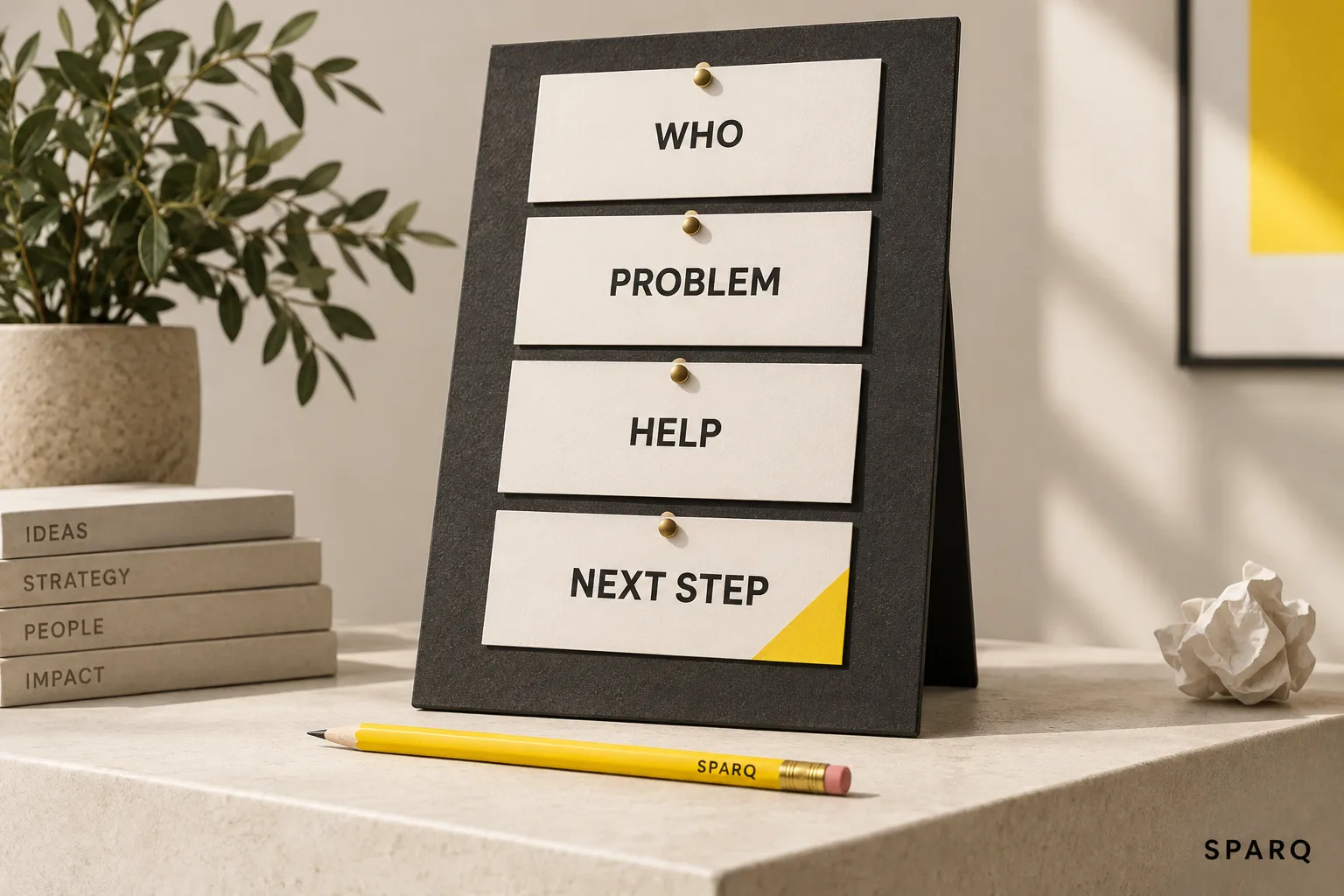
Explain who you help, the problem you address, what someone receives, and how to take the next step. Those four answers give you the basis for a page, an email, or a conversation.
Start with the person and the situation
“I help people reach their potential” leaves a lot for the reader to work out. What kind of help? For whom? When would they need it?
Try describing a recognisable moment. Perhaps you help first-time managers prepare for difficult team conversations. Or you help course creators organise their first live workshop.
Use words people use when describing a recent difficulty. Ask about what happened and what they tried before writing the headline. You can offer several services while giving each page a clear audience and purpose.
Say what the person receives
Make the work tangible. A session, a written plan, a template, or a working page is easier to picture than a broad promise of transformation.
Here is a fictional example:
Before: “A powerful programme to transform your leadership.”
After: “A practical workshop for first-time managers preparing for difficult team conversations. Practise a conversation structure and leave with a plan for your next discussion.”
The second version explains the audience, the activity, and the intended use. It still needs practical details before someone can book, such as format, timing, price, and what support is included.
Describe only what the offer actually provides. If there is no personal feedback, do not imply that participants receive it. If the session produces a starting plan, explain that rather than promising every issue will be resolved.
Connect the feature to its use
A feature describes what is included. A benefit explains why it might help.
“Three planning templates” is a feature. “A structure for preparing your next three team meetings” explains their intended use.
Finish with one clear next step. If the button opens an enquiry form, say “Ask about the workshop.” If it leads to a schedule, say “View workshop dates.” Make the action match what happens after the click.
Ask an intended buyer to explain the offer back: who is it for, what happens, and what do they receive? If they cannot answer, revise the missing detail. If they understand but are not interested, the issue may be fit, price, or timing rather than wording.
Work through the message with SPARQ
If you keep rewriting the page without getting clearer, SPARQ’s consulting service can help you review the offer and existing materials. Nicky works through the audience, message, and next decision with you, then documents the agreed recommendations. Copywriting or a page build can be scoped separately when you want help implementing them.
Frequently asked questions
How specific should I be about who my offer is for?
Be specific enough that the reader recognises a relevant situation. You might describe their role, stage, or current problem. Avoid adding narrow details that do not affect the help you provide. The description should guide the right people without excluding suitable buyers for no reason.
What is the difference between a feature and a benefit?
A feature is something included, such as a workbook or a review call. A benefit describes the useful role it plays, such as organising ideas or finding gaps in a plan. Connect the two so the benefit has something concrete behind it.
How can I explain the value without making big promises?
Describe the work, the intended use, and the support included. Share genuine evidence when you have it and explain its context. Be clear about what depends on the customer’s own actions or circumstances. A specific, credible explanation can be persuasive without guaranteeing an outcome.
Your next step
Share your offer and the part people seem to misunderstand. Include your current page or description. Nicky will follow up personally to explore where the message needs work.
Related reading: Do you need a website or just a landing page?