How to test a product idea before building the whole thing
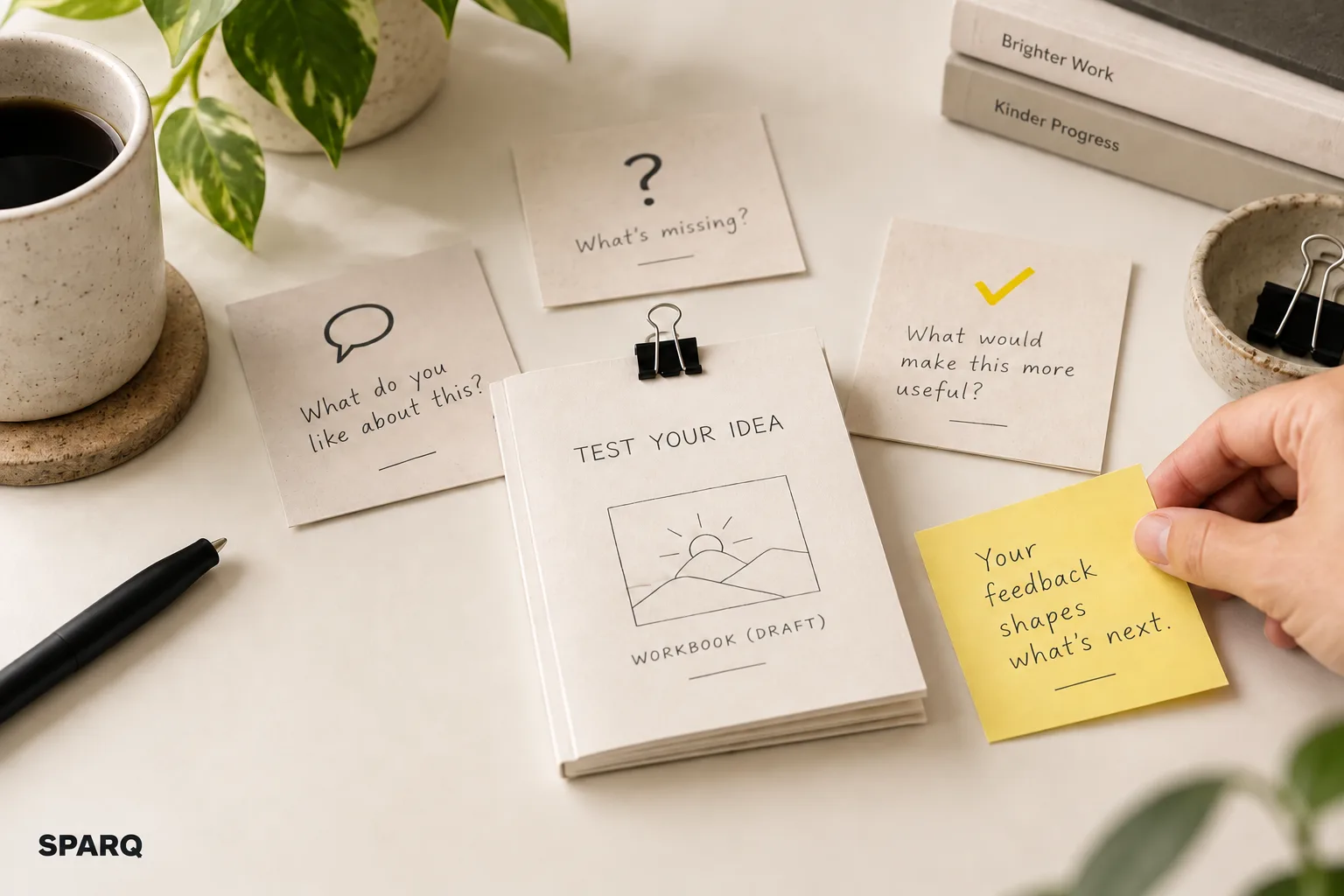
People liked your course sample, but nobody has bought yet. Should you improve the lessons or find a different audience? Useful feedback and willingness to pay answer different questions. Test the uncertainty before doing more building.
Show a small sample to likely buyers, then offer an honest next step. Find out whether the problem matters, whether the sample helps, and whether people commit time or money.
Find out how people handle the problem now
Before showing your solution, ask about the person’s current situation. “Tell me about the last time you prepared a workshop” usually gives you more useful detail than “Would you buy a workshop planning kit?”
Ask what took effort, what they tried, and what happened. Listen for specific situations. Someone may like your idea while already having a simple solution that suits them.
Speak with people who resemble your intended buyers. Friends can help you spot confusing wording, but their encouragement may not tell you whether the product fits its market.
Make a sample they can try
Suppose you want to create a toolkit for planning workshops. Start with one agenda template and a completed example. Ask someone to use it for a workshop they are preparing.
Watch for where they hesitate. Do the headings make sense? Do they know what to write? Is an important step missing?
Let them try before explaining every detail. Otherwise, you may end up testing your ability to guide them personally rather than the usefulness of the resource itself.
Match the evidence to the decision
Different actions tell you different things. A compliment suggests interest in the conversation. Trying the sample shows willingness to spend time. Joining a clearly described waiting list shows interest in updates. Paying for a real offer provides stronger evidence of willingness to buy that offer at that price.
None of these guarantees a larger launch will work. Keep the test honest about what exists and what happens next. If you are only collecting interest, say that clearly.
Before you begin, choose a decision rule. If people cannot use the template, improve the instructions. If they use it but decline a paid version, ask what is missing or unnecessary. If the right people never see it, you have not yet tested demand.
Write down who saw the offer, what they did, and what they said. Include refusals and existing alternatives. Decide whether to continue, change the idea, or stop. A test is useful even when it prevents an unnecessary build.
Decide what to test with SPARQ
If you cannot decide which audience, offer, or next step to test, bring that question to SPARQ’s consulting service. Nicky can review your materials and work through the options with you. The agreed recommendations give you a focused direction; building a test page or email sequence is scoped separately.
Frequently asked questions
What should I ask someone about my idea?
Ask about their recent experience of the problem, how they handle it now, and where they struggle. After they try a sample, ask what was useful and what was unclear. Avoid questions that invite a polite yes or suggest the answer you want.
Does positive feedback mean people will buy?
No. People can enjoy an idea without needing it enough to purchase. Look at the context behind the feedback and the action they take. Buying behaviour also depends on the offer, price, timing, and trust, which a casual conversation may not test.
What can I test before the product is finished?
You can test whether the problem matters, whether the description is understandable, and whether a small sample is useful. A clear waiting-list page can test interest in hearing more. Explain what is available now and avoid implying an unfinished product is ready to use.
Your next step
Tell Nicky what you want to test and what evidence you have so far. Bring your outline or sample, even if it is unfinished. He will follow up personally to explore how he could help.
Related reading: Turn something you teach into a small digital product